




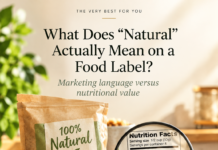










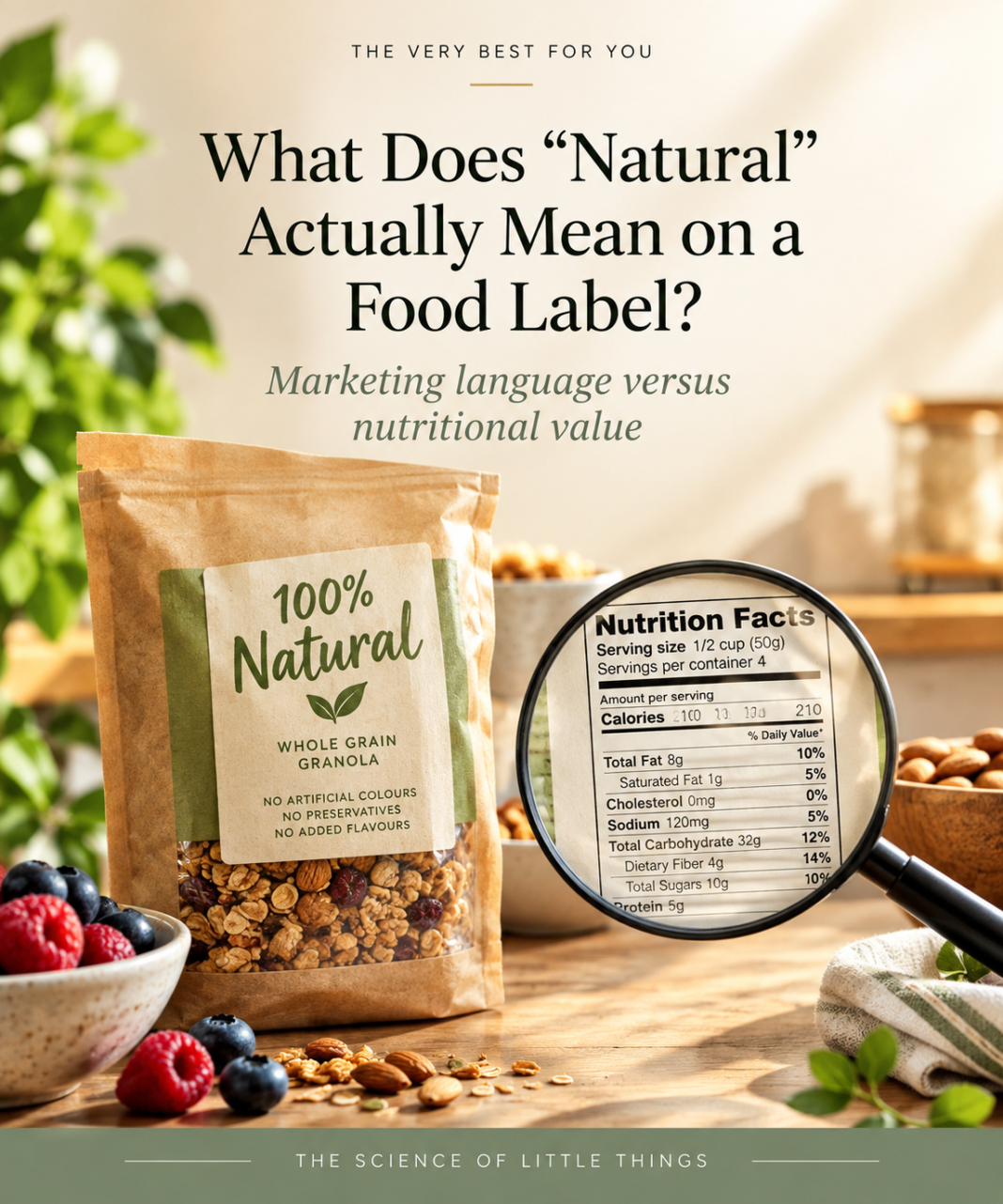
Marketing language versus nutritional value
You pick up a packet at the supermarket. The front says “100% Natural.” The packaging looks clean, the colours are earthy, and the product seems healthier than the alternatives. But here’s the curious question: Does the word “natural” actually tell you what’s inside—or how good it is for you?
The answer may surprise you.
1. “Natural” doesn’t automatically mean healthy
Many shoppers associate natural foods with fewer chemicals, better nutrition and safer ingredients. Yet the word doesn’t necessarily guarantee any of these things.
In the United States, the Food and Drug Administration (FDA) has a longstanding policy concerning “natural” claims, but it has not established a formal, comprehensive definition covering every aspect of food production. Its policy focuses on whether artificial or synthetic substances have been added that would not normally be expected in the food. It does not establish that a product is more nutritious or healthier. FDA
That means a product labelled “natural” could still contain substantial amounts of sugar, salt or saturated fat.
2. Natural and organic are not the same
These words are often used together in marketing, but they mean different things.
Natural generally signals something about ingredients or processing, depending on the product and applicable regulations.
Organic, on the other hand, refers to specific production standards and certification requirements in countries such as the United States.
Neither term, by itself, proves that a product contains more nutrients or is the healthiest option. Harvard Health
3. Why does the word influence us so much?
The word “natural” creates an immediate impression. It can suggest simplicity, purity and a closer connection to nature.
This is where marketing becomes fascinating: we may form an opinion about a product before examining its nutritional information.
A package can emphasise what sounds appealing while leaving other important details less prominent. That doesn’t necessarily mean the product is bad; it means the front label tells only part of the story. Harvard T.H. Chan School of Public Health
4. Become a smarter label reader
The next time you shop, try these four simple steps:
- Read the ingredients list. Look at what the product actually contains.
- Check added sugars. “Natural” doesn’t mean sugar-free.
- Compare sodium and saturated fat. These can matter when choosing between similar products.
- Look at the serving size. Nutritional values are often listed per serving, not necessarily per package.
Remember that no single label tells the whole story. Your overall diet matters more than one attractive phrase on a packet.
The takeaway
The next time you see “natural” on a food label, pause before assuming it means healthier.
Ask a better question: What does this food actually offer me nutritionally?
Because sometimes, the most useful thing on a package isn’t the word printed in the biggest letters. It’s the information you discover when you turn it over.