

















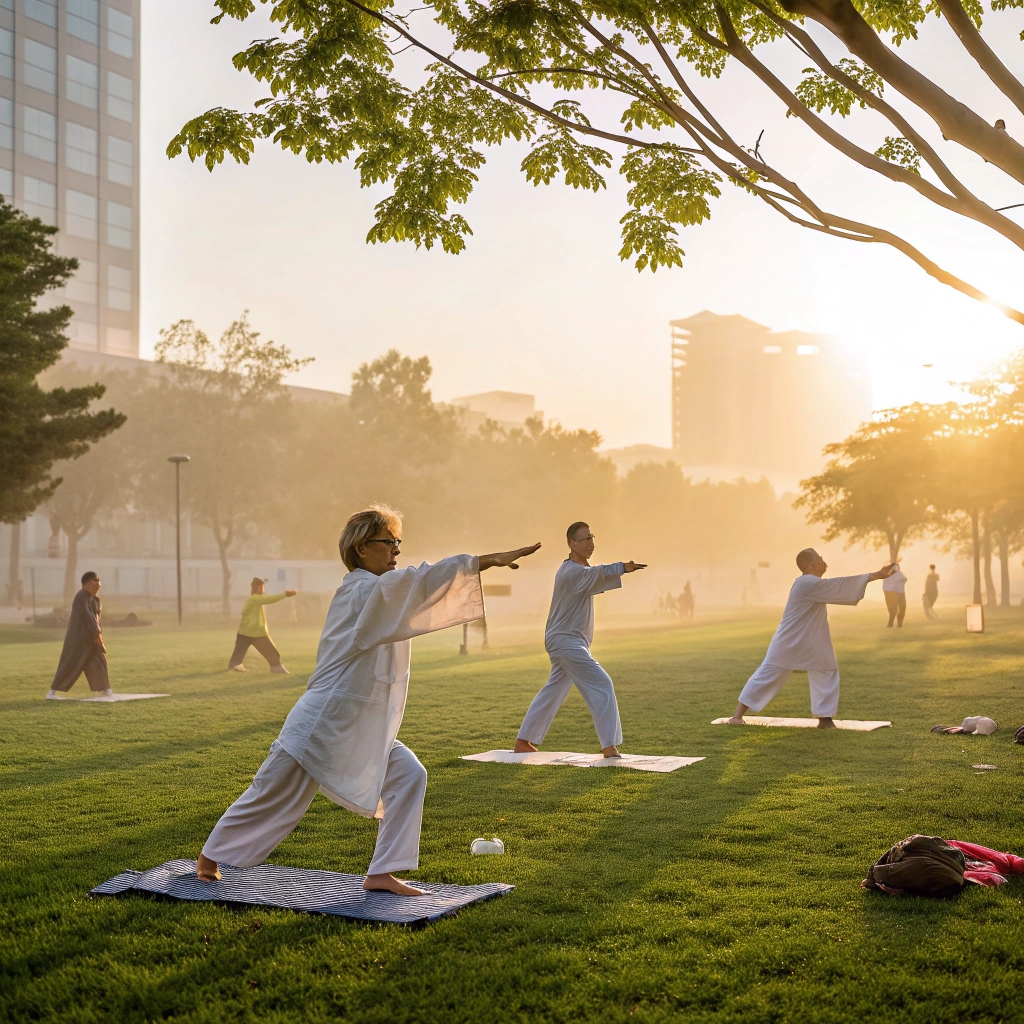
In a world that measures workouts by sweat, speed, and calorie burn, there’s a quiet revolution taking place—one breath at a time. The rise of mindful movement practices like Tai Chi, Qigong, and Slow Fitness is proof that going slower can sometimes take you further.
Unlike high-intensity workouts that push the body into overdrive, mindful movement focuses on harmony—between body, mind, and spirit. And here’s the thing: science is finally catching up with what ancient traditions have known for centuries—slowing down can heal you faster than speeding up.
1. Tai Chi – The “Meditation in Motion”
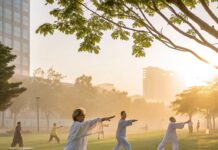
I still remember my first Tai Chi class in a park in Hong Kong. It was 6 AM, and the city was already buzzing—but in that little green patch, a dozen people were moving like water, flowing from one posture to another. The leader, an 80-year-old man named Mr. Wong, moved with such grace that it was hard to believe he once suffered from crippling arthritis.
Benefits:
- Improves balance and coordination (especially beneficial for seniors)
- Reduces stress and anxiety by regulating breath and movement
- Strengthens muscles without straining joints
Real-life note: A client of mine, a corporate executive with chronic back pain, replaced his gym routine with 30 minutes of Tai Chi each morning. Within 3 months, he not only reported reduced pain but also said his work meetings felt “less like battles and more like conversations.”
2. Qigong – Cultivating Life Energy
While Tai Chi is more structured, Qigong (pronounced chee-gong) is like its freer cousin. Rooted in Traditional Chinese Medicine, Qigong combines gentle movements, breathing techniques, and visualization to stimulate the body’s Qi (life force).
During a retreat in Bali, I practiced Qigong on a cliff at sunrise. As we moved, our instructor asked us to “breathe in the ocean and breathe out the clouds.” It sounded poetic—but the calm and clarity afterward felt like an inner reset button had been pressed.
Benefits:
- Boosts immunity by stimulating lymphatic flow
- Supports emotional balance through breath control
- Enhances energy levels without caffeine or stimulants
Real-life note: One of my students with long COVID found that a 10-minute daily Qigong routine helped her regain stamina and reduce the brain fog that had lingered for months.
3. Slow Fitness – The New-Age Approach to Strength
Slow Fitness is a growing trend among people who want to build strength without the wear and tear of high-impact workouts. Think controlled, mindful resistance training—moving weights or your own body slowly to activate muscles fully while keeping the nervous system calm.
I worked with a 42-year-old woman who had been a marathon runner until knee injuries sidelined her. We switched her to slow squats, resistance bands, and isometric holds. Not only did her knees heal, but her strength and posture improved beyond her running days.
Benefits:
- Safer on joints and connective tissues
- Increases muscle activation and endurance
- Encourages body awareness and better form
Why This Shift Matters
We’re living in an era of burnout—not just at work, but in fitness too. Many people push their bodies hard, only to end up injured, exhausted, or demotivated. Mindful movement flips that script. Instead of punishing the body, it listens to it.
And the results?
- Sustainable fitness that you can practice well into your 80s or 90s
- A deeper connection between physical health and emotional well-being
- Less stress, more vitality
Getting Started
If you’re curious but unsure where to start:
- Sample Classes Online – Try a 10-minute beginner Tai Chi or Qigong session on YouTube.
- Local Communities – Many parks have morning Tai Chi groups open to newcomers.
- Integrate Slowly – Even 5 minutes a day can make a difference.
Final Thought
Fitness doesn’t have to mean gasping for breath or chasing a number on your watch. Sometimes the most transformative workouts are the ones that feel like you’re hardly moving at all.
As Mr. Wong from my Hong Kong morning once told me:
“When you move slowly, the world slows with you. That’s when you can hear your heart speak.”
Maybe it’s time we all started listening.
Trusted References Backing Mindful Movement
1. Tai Chi & Qigong for Mental and Emotional Well-being
- These practices help reduce stress, anxiety, depression, and negative thoughts, while enhancing overall mental calm and cognitive clarity Wisconsin KnowledgeBasePsychiatry Online.
- A UCLA psychiatrist found notable stress-marker reductions and improved cognitive function in regular Tai Chi practitioners UCLA Health.
2. Physical Health & Balance
- The gentle, low-impact nature of Tai Chi supports improvements in muscle strength, flexibility, balance, and fall prevention—especially in older adults Harvard HealthCleveland Clinicstjamesrehab.comPMC.
- It’s even recognized by major health bodies like the CDC and the Arthritis Foundation for reducing falls and easing arthritis symptoms Cleveland ClinicHealth.
3. Cardiopulmonary & Immune Benefits
- Evidence shows favorable cardiopulmonary outcomes among older adults practicing Tai Chi or Qigong PMCXia & He Publishing.
- They’re also linked to reduced inflammation and improved immune markers Xia & He Publishing.
4. Bone Health
- Post-menopausal women practicing Tai Chi or Qigong showed slower bone loss and improved bone mineral density compared to non-exercisers PMC.
5. Cognitive Function & Chronic Conditions
- Studies show cognitive improvements in older adults with mild cognitive impairment, and slower Parkinson’s disease progression—including mood, sleep, and non-motor symptom improvements Health.
- Tai Chi also improved arm mobility in breast cancer survivors, helped with balance in multiple sclerosis, and enhanced quality of life in PTSD and schizophrenia contexts PMC.
6. Qigong’s Healing Scope
- Qigong has shown positive effects for COPD, fibromyalgia, major depressive disorder, and is generally considered safe and cost-effective Wikipedia.
- The VA even highlighted it for helping with chronic conditions like diabetes, hypertension, and obesity Veterans Affairs.
7. Integrated Reviews & Meta-Analyses
- A comprehensive literature review covering 77 randomized controlled trials across both Tai Chi and Qigong found consistent health benefits spanning bone health, cardiovascular function, falls risk, quality of life, immune health, and more ResearchGate.
Quick Reference Table
| Benefit Area | Evidence Source Highlights |
|---|---|
| Mental Health | Stress reduction, improved mood and cognition Wisconsin KnowledgeBaseHealthUCLA Health |
| Physical Fitness & Mobility | Better strength, flexibility, balance, fall prevention Harvard HealthCleveland ClinicHealthPMC |
| Cardiopulmonary & Immunity | Enhanced heart/lung function and immune markers PMCXia & He Publishing |
| Bone Density | Slower bone loss in older women PMC |
| Chronic & Neurological Conditions | Cognitive and functional gains in diverse patient groups PMCHealth |
| Qigong’s Therapeutic Reach | Efficacy in COPD, fibromyalgia, depression; low cost and safe WikipediaVeterans Affairs |
| Overarching Evidence Base | Broad RCTs support across multiple health domains ResearchGate |